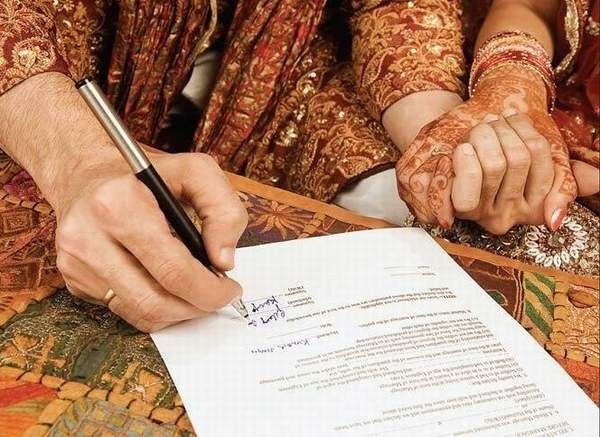
Marriage registration is an essential legal process that provides official recognition of a marriage under Indian law. Whether your marriage was solemnized through traditional customs, religious ceremonies or a civil ceremony, obtaining a marriage certificate is crucial for legal, financial and immigration purposes.
If you are looking for Marriage Registration in Patiala House Courts, New Delhi, understanding the applicable laws, documentation requirements, eligibility criteria and procedural steps can help you complete the registration without unnecessary delays.
At Sharma & Company, our legal professionals assist couples with marriage registration documentation, application filing, verification and court formalities to ensure a smooth and legally compliant process.
Why Marriage Registration is Important
Marriage registration serves as official legal proof of marriage issued by the competent authority. A marriage certificate is required for numerous legal and administrative purposes, including:
- Applying for passports with spouse details
- Visa and immigration applications
- Updating bank records
- Property ownership and inheritance matters
- Insurance nominations
- Pension and employee benefits
- Name change documentation
- Government records and official identification
- Child-related legal documentation
A registered marriage also helps avoid future legal disputes regarding marital status.
Marriage Registration Laws in India
Marriage registration in New Delhi is generally governed under two primary legal provisions depending on the circumstances of the marriage.
1. Hindu Marriage Act, 1955
The Hindu Marriage Act applies when both spouses belong to:
- Hindu
- Sikh
- Jain
- Buddhist
The marriage must already have been solemnized according to customary religious ceremonies before registration.
2. Special Marriage Act, 1954
The Special Marriage Act is applicable when:
- Couples belong to different religions
- One or both spouses prefer a civil marriage
- Interfaith marriages
- Couples choose marriage without religious ceremonies
The procedure under the Special Marriage Act involves statutory notice requirements before registration.
Who Can Apply for Marriage Registration?
A couple may apply for marriage registration if they satisfy the following conditions:
- Bride must be at least 18 years old.
- Groom must be at least 21 years old.
- Both parties should be mentally competent.
- Neither party should have a living spouse at the time of marriage.
- Marriage should be legally valid under the applicable law.
- Required residential conditions prescribed by the authority should be fulfilled.
Marriage Registration in Patiala House Courts, New Delhi
Patiala House Courts is one of the major district court complexes in New Delhi handling various legal matters, including marriage-related proceedings under applicable laws.
Couples residing within the relevant jurisdiction or meeting the prescribed eligibility criteria may complete the marriage registration process through the competent Marriage Registrar associated with the jurisdiction.
Proper legal guidance helps ensure:
- Correct documentation
- Error-free application
- Timely appointment scheduling
- Compliance with legal formalities
- Faster processing
Documents Required for Marriage Registration
The exact documentation may vary depending on the applicable law and specific circumstances. Commonly required documents include:
Identity Proof
- Aadhaar Card
- Passport
- PAN Card
- Driving Licence
- Voter ID
Address Proof
- Aadhaar Card
- Passport
- Electricity Bill
- Rent Agreement
- Bank Passbook
- Utility Bills
Age Proof
- Birth Certificate
- Passport
- School Leaving Certificate
- Class 10 Certificate
Marriage Proof
- Wedding photographs
- Marriage invitation card
- Marriage certificate issued by religious institution (if available)
Passport Size Photographs
Recent passport-size photographs of both spouses.
Witness Documents
Generally, witnesses should provide:
- Identity proof
- Address proof
- Passport-size photographs
Step-by-Step Marriage Registration Process
Step 1: Legal Consultation
The process begins with verifying eligibility and determining whether registration falls under the Hindu Marriage Act or the Special Marriage Act.
Step 2: Document Verification
All supporting documents are carefully reviewed to avoid objections or rejection due to incomplete paperwork.
Step 3: Application Preparation
The prescribed application form is completed with accurate personal information and supporting documents.
Step 4: Appointment Before the Marriage Registrar
An appointment is scheduled with the competent authority for document verification.
Step 5: Verification
The Marriage Registrar verifies:
- Identity
- Age
- Address
- Marriage details
- Witness information
Step 6: Issuance of Marriage Certificate
After successful verification and completion of legal formalities, the marriage certificate is issued according to the applicable legal provisions.
Marriage Registration Under the Hindu Marriage Act
Where the marriage has already been solemnized according to Hindu customs, the registration process generally includes:
- Submission of application
- Document verification
- Appearance of husband and wife
- Appearance of witnesses
- Registrar verification
- Certificate issuance
This process is generally simpler compared to registration under the Special Marriage Act.
Marriage Registration Under the Special Marriage Act
For interfaith or civil marriages, the process includes:
- Filing notice of intended marriage
- Publication of notice
- Mandatory statutory notice period
- Hearing of objections, if any
- Marriage solemnization (where applicable)
- Registration
- Issuance of certificate
The timeline is longer due to statutory legal requirements.
Role of Witnesses
Witnesses play an important role during marriage registration.
Generally, witnesses should:
- Be adults
- Carry valid identity proof
- Carry address proof
- Be physically present when required
The exact number of witnesses depends on the applicable legal procedure.
Common Reasons for Delay in Marriage Registration
Applications may be delayed due to:
- Incomplete documentation
- Incorrect application details
- Mismatch in names across documents
- Address discrepancies
- Missing witness documents
- Age proof inconsistencies
- Jurisdiction-related issues
Careful preparation significantly reduces the possibility of delays.
Benefits of Professional Legal Assistance
Although marriage registration is a statutory process, legal assistance can simplify the procedure and reduce documentation errors.
Professional legal support may include:
- Eligibility assessment
- Documentation guidance
- Application drafting
- Appointment coordination
- Registrar assistance
- Legal compliance
- Resolution of documentation issues
This helps applicants complete the process efficiently while ensuring compliance with applicable legal requirements.
Why Choose Sharma & Company?
At Sharma & Company, we provide professional legal assistance for marriage registration matters in Patiala House Courts, New Delhi.
Our legal services focus on:
- Personalized legal guidance
- Complete document verification
- Accurate application preparation
- Assistance with Marriage Registrar procedures
- Support for Hindu Marriage Act registrations
- Assistance relating to Special Marriage Act procedures
- Transparent communication throughout the process
Our objective is to help clients navigate legal formalities with confidence while ensuring procedural compliance.
Frequently Asked Questions (FAQs)
How long does marriage registration take in Patiala House Courts?
The timeline depends on the applicable law, completeness of documents, appointment availability and verification by the competent authority.
Is physical presence mandatory?
Yes. The spouses are generally required to appear before the Marriage Registrar as per the applicable legal procedure.
Can interfaith couples register their marriage?
Yes. Eligible interfaith couples may register their marriage under the Special Marriage Act, 1954, subject to compliance with statutory requirements.
Are witnesses required?
Yes. Witnesses are generally required during the registration process under applicable legal provisions.
Can a marriage be registered after many years?
Yes. Subject to legal eligibility and documentary requirements, marriages solemnized earlier may also be registered.
Is a marriage certificate legally valid throughout India?
Yes. A legally issued marriage certificate is recognized across India for various legal and administrative purposes.
Conclusion
Marriage registration is an important legal step that safeguards the rights of both spouses and provides officially recognized proof of marriage. Whether registering under the Hindu Marriage Act or the Special Marriage Act, accurate documentation and compliance with legal procedures are essential for a smooth process.
If you require professional legal assistance for Marriage Registration in Patiala House Courts, New Delhi, Sharma & Company offers reliable legal support for document verification, application preparation and procedural guidance to help you complete the registration process efficiently